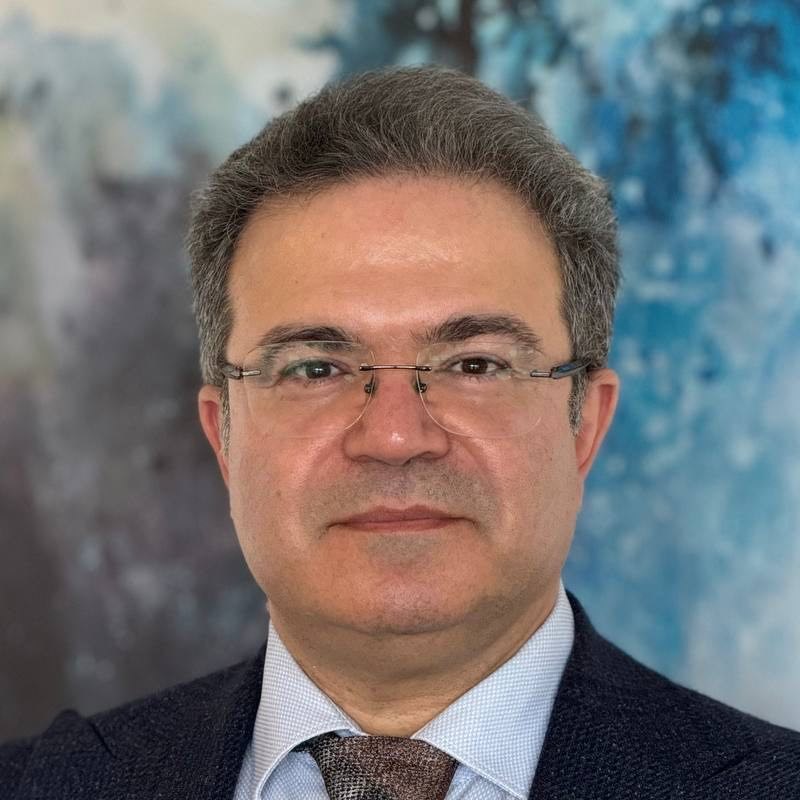
This page is the official response of Farhad Moghadamsalimi to allegations published about him and his former business, Farhad Exchange. The facts below are taken from his approved biography.
Court case
Between January 2019 and March 2020 (Dey 1397 to Esfand 1398), Mohammad Jorjandi, manager of the “Webamooz” website, published material against Farhad Moghadamsalimi that included accusations of, among other things, fraud, money laundering and a Ponzi scheme concerning the Bitroleum token. Farhad Moghadam Salimi himself filed a complaint in court. These accusations were rejected in the courts of Iran, and Mohammad Jorjandi was convicted by the judicial authorities of publishing falsehoods and insult. To this day, Farhad Moghadamsalimi has no criminal record in either Iran or Turkey; that is, he has not been convicted of any offence by any judicial authority, and no criminal case has been brought against him.
Farhad Moghadamsalimi has no criminal record in either Iran or Turkey.
Farhad Exchange
In 2004 he started a Yahoo group for market analysis. The group gained a wider audience day by day and, in response to market demand, gradually took the name “Farhad Exchange”. In 2009 the group became the website farhadexchange.com. Farhad Exchange was a platform for exchanging electronic currencies between users and was regarded as one of the early fully automated exchanges in Iran.
Bitcoin appeared in that same year, 2009, but at the time it was hardly traded. The common electronic currencies of that period, before the rise of Bitcoin, were e-gold, c-gold, WebMoney, Perfect Money and Liberty Reserve. Working with these currencies was legal and commonplace in its time. Around 2012 and 2013 Bitcoin was also added to Farhad Exchange’s list of currencies, and the business quickly became one of the largest exchanges in Iran at that time.
The buying and selling of the various instruments in this business was always carried out in accordance with the laws of the time, and wherever an instrument was declared legally prohibited, activity with it was stopped.
Cooperation with WebMoney
From 2009 to 2019 Farhad Moghadam Salimi was the official representative of WebMoney in Iran. His role was that of a “registrar” for issuing the WebMoney identity certificate (Personal Passport). That is, he reviewed the documents of WebMoney account holders and verified their identity. This representation did not involve buying or selling WebMoney or carrying out transactions for users.
This cooperation ended in 2019, and he has had no activity in WebMoney since then.
Today the use of WebMoney is prohibited in many countries, including Iran, Turkey and European countries. In practice, WebMoney no longer has any use in exchange outside Russia.
His role with WebMoney (2009–2019) was limited to identity verification as registrar for the Personal Passport. It involved no buying or selling and no transactions for users, and it ended in 2019.
From Farhad Exchange to efex.pro
Farhad Exchange continued from 2019 under the brand efex.pro, run by an independent team in Iran. Farhad Moghadamsalimi is a shareholder but has no executive role in its management. efex.pro operates in accordance with the regulations of the Central Bank of Iran, carries out full identity verification of its users, and strives to comply not only with domestic law but also with international anti-money-laundering requirements, and to keep away, as far as possible, from any funds that would be problematic in the view of international bodies. Since 2019 he has withdrawn no funds from this business, and his assets in Iran have remained there.
Transparency and compliance
The buying and selling of the various instruments in his businesses has always been carried out in accordance with the laws of the time, and wherever an instrument was declared legally prohibited, activity with it was stopped.
His role with WebMoney was limited to identity verification (registrar for the Personal Passport) and ended in 2019.
Farhad Moghadamsalimi is a shareholder of efex.pro but has no executive role in its management. Since 2019 he has withdrawn no funds from this business.
He is a tax resident of Turkey and pays his taxes in Turkey. At present he personally has no bank account or tax file in Iran and receives no income from efex.pro.
He has been a tax resident of Turkey since 2019. His and EgeMoney’s funds are held entirely within the Turkish banking system; no funds are transferred between Iran and Turkey.
He has never worked in any governmental, state or military body of Iran. Neither he nor efex.pro has had any receipts or payments with Iranian state bodies or with sanctioned persons or entities.
Farhad Moghadamsalimi is not a Politically Exposed Person (PEP). He has never held any governmental, state, public or military position in Iran, Turkey or any other country, and he has no connection to any government body or to any sanctioned person or entity.
Neither Farhad Moghadamsalimi nor efex.pro appears on the OFAC, European Union or United Nations sanctions lists. This was confirmed on 12 November 2026 by checking the official versions of these lists. The names Farhad Exchange and EgeMoney also do not appear on these lists or on the UK Sanctions List.
Claims about betting sites (1xBet) and PS Voucher codes
Mohammad Jorjandi claimed on his website and in his videos that Farhad Exchange had laundered money through “PS Voucher” codes and the Bitroleum token and had cooperated with betting sites, including 1xBet. These claims were not based on any document and were never proven in court; on that basis, Mohammad Jorjandi himself was convicted.
No gambling services: Farhad Exchange and efex.pro have never run or operated any betting or gambling service, and have never cooperated with 1xBet or any other betting site.
Fabricated evidence: The Telegram channel presented as the “official channel” of a betting site, and used as the main basis of the claims, had only about 217 members. An expert review showed that this material, presented as proof of a million-dollar operation, was fabricated and unrelated to the case.
Unfounded insinuation: Linking the launch of a betting site’s Persian section to Farhad Exchange was an insinuation not supported by any document.
PS Voucher codes: These codes were a common tool in the digital-currency industry, bought and sold on many websites, and were not specific to Farhad Exchange. Farhad Exchange only handled their ordinary buying and selling, like the other electronic currencies of that time, and its explanations about these codes were on its website long before the claims were made.
No. The accusations of fraud, money laundering and a Ponzi scheme concerning the Bitroleum token, published against Farhad Moghadamsalimi between January 2019 and March 2020 by Mohammad Jorjandi, manager of the Webamooz website, were rejected in the courts of Iran, and Mohammad Jorjandi was convicted by the judicial authorities of publishing falsehoods and insult.
Does Farhad Moghadamsalimi have a criminal record?
No. Farhad Moghadamsalimi has no criminal record in either Iran or Turkey; he has not been convicted of any offence by any judicial authority, and no criminal case has been brought against him.
Was Farhad Exchange a scam?
No. Farhad Exchange (2004–2019) was a platform for exchanging electronic currencies between users. The buying and selling of the various instruments in this business was always carried out in accordance with the laws of the time, and wherever an instrument was declared legally prohibited, activity with it was stopped. The accusations published against Farhad Moghadamsalimi were rejected in the courts of Iran.
About the Author
This article was written by Farhad Moghadamsalimi, Senior General Manager of EgeMoney and a market analyst with more than three decades of experience in financial markets.